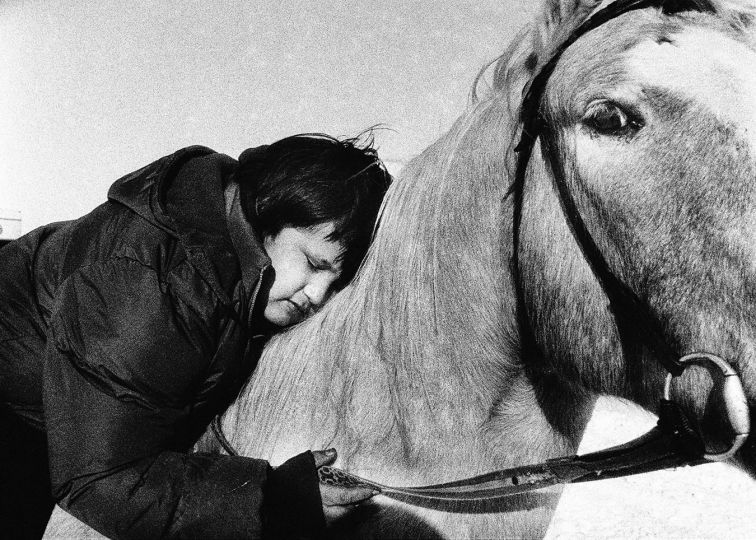
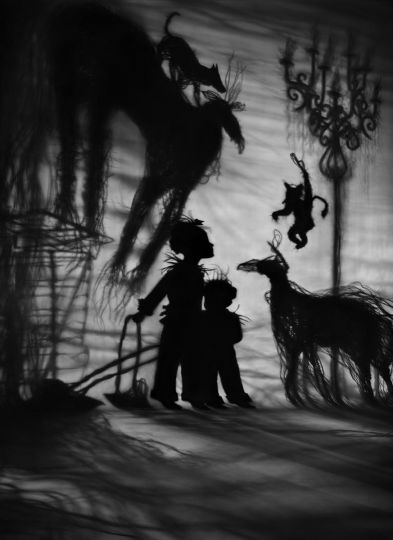
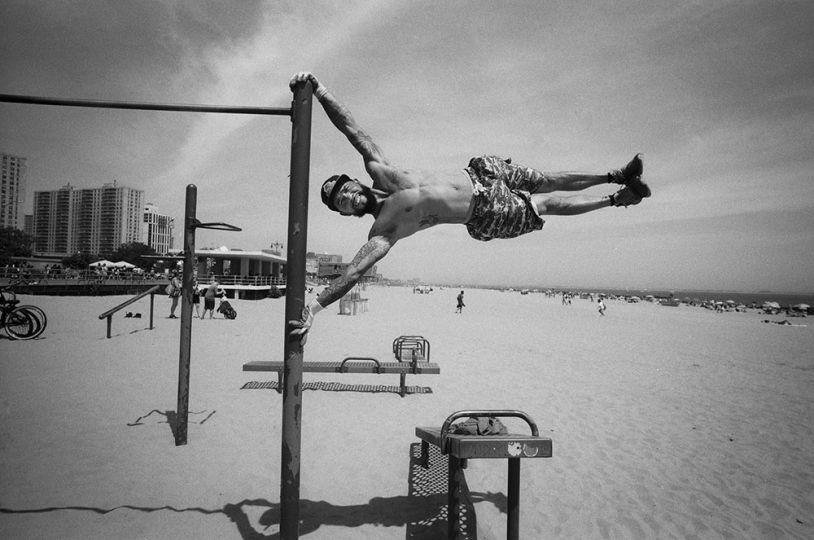
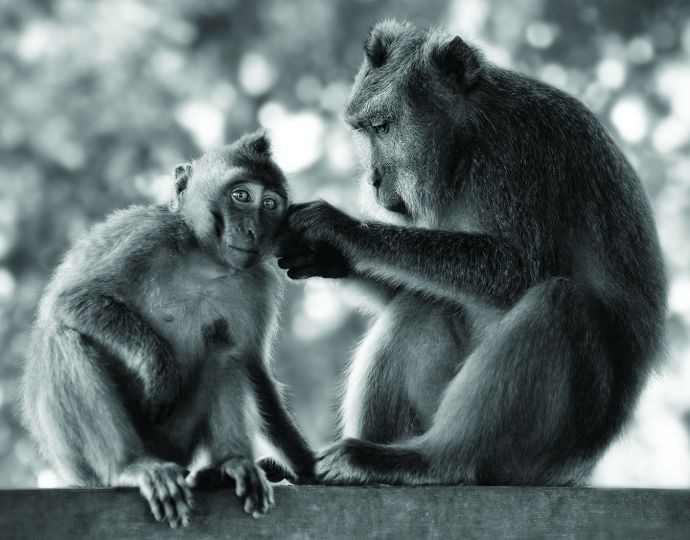
In its beginning. earth was fractured, frail
with coveting, and could not wait for us –
so, flailing in the muscled clutch of grace,
we blessed this sullen place. As we were born
and born again, in tenements and lush,
exuberant savannas, flung from hips
of southern silver, lifted into life
while mamas shrieked and swore, as we were born
and born again, emphatic, snared within
our thrash and wail, our breath already slowed
by blood’s incessant question in our chests,
every dazzled witness rose to name
us yet again. The world was not prepared.
Inside its realm, no one could fathom us.
(An excerpt from the poem Nap Unleashed by Patricia Smith which features in the book in its entirety).
Childhood memories can last a lifetime often surfacing at different moments to take on new and unexpected significance. For internationally renowned photographer, Sandro Miller, a native Chicagoan, it was his Catholic upbringing and in particular learning to recite the Lord’s Prayer as a child that unexpectedly became the seed for his latest book, On Earth as It Is NOT in Heaven.
As the political and social chaos in Chicago, and more broadly the United States escalated fuelled by Trumpism, Sandro’s thoughts kept returning to a line from the Lord’s Prayer – on Earth as it is in Heaven. It was a line he had mulled over as a child, at the time interpreting it to mean that the beauty of what he imagined Heaven to be was mirrored here on Earth. “But life does not and cannot mirror Heaven,” says Sandro. “Earth is a place where everything happens, good, bad, evil and so much more. My hope is that “heaven as it is on earth” was just a misunderstood interpretation on my part.”
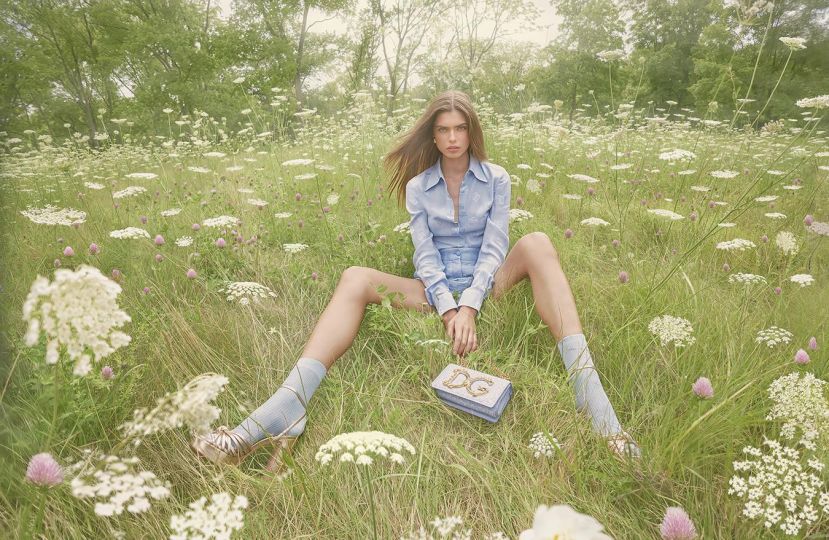
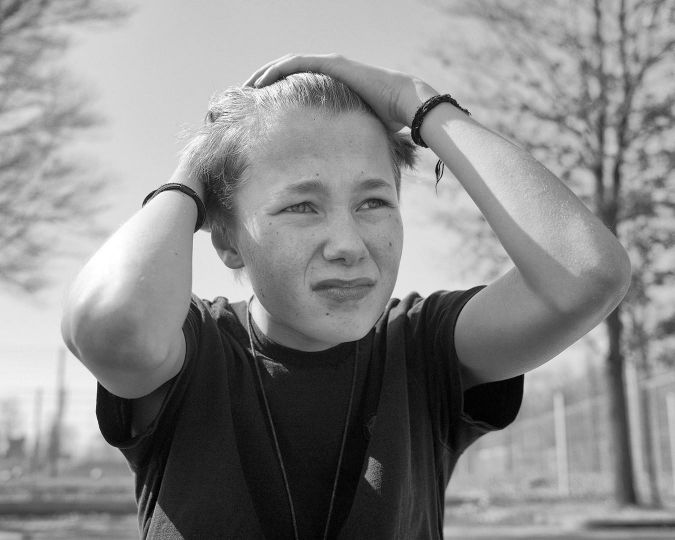
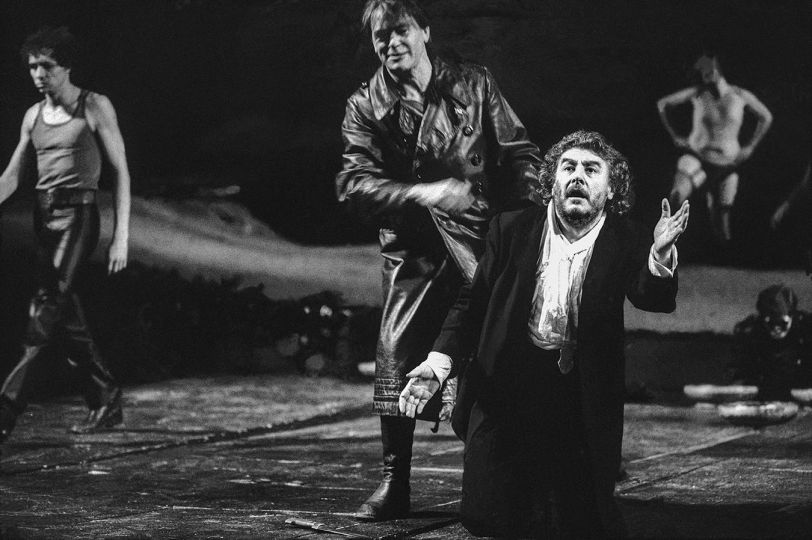
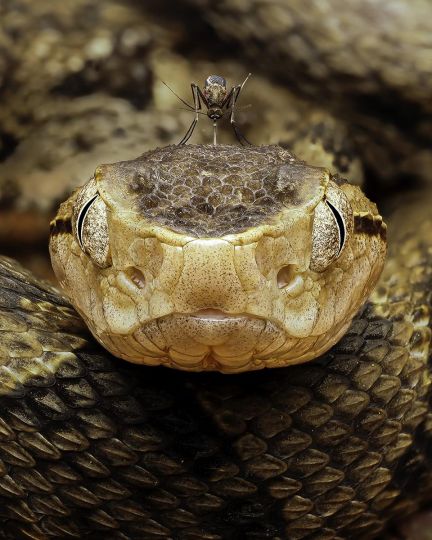
Through portraits taken over the past 50 years, from Chicago to Papua New Guinea, of tribal peoples, elderly aunts and hardcore bikers, of cultural icons, celebrities and everyday folk, On Earth as It Is NOT in Heaven, captures this thing we call life, radiating a multiplicity of human experiences that cannot be erased by the dictatorial edicts of megalomaniacs.
The book, which has been in the making for more than four years, is founded on the very concepts of diversity, equity and inclusion that some in power are working to erode. Now more than ever this visual testimony is needed.
Art has always played a fundamental role in challenging power and questioning authority. On Earth as It Is NOT in Heaven contributes to this age-old purpose, showing the good, the bad, the beautiful and the ugly truths of being human without judgement or guile.
Yet the book is a powerful political statement that challenges ideas of social norms, reminding us that humanity has many faces. It also raises a collective finger to the draconian, binary, and ignorant views of the current American government.
Sandro’s series Love Between Us, Hatred Behind Us is a perfect example. In this collection, Sandro has combined intimate black and white portraits of interracial couples overlaid against some of the most iconic images from the past century, pictures that remind us of the racial violence that has marred American history, and persists. In the portrait of Kachi and Jeanine, the naked couple embraces, looking directly at the camera. Arms entwined they are protecting each other from the violence of the civil rights movement that unfolds behind them. Their portrait appears over an iconic image taken by Bill Hudson in 1963 in Birmingham, Alabama which captures the moment when a police dog, encouraged by its master, lunges to attack 15-year-old African American youth Walter Gadsden. There is no hiding from this dark history. Yet the love of Kachi and Jeanine dominates. It conveys that we have a choice as to how we want to imagine our collective future.
Sandro explains that the colour red, which washes across the historical background images in this series, was chosen “as a reminder of the blood shed in this very dark time in America’s history. The intention of these photographs is to show the world that unlike what is trying to be sold to us through media and social media lies, we, black and white, do love each other. Our current administration promotes hatred. We will continue to work towards love.” Patricia Smith, poet laureate of Princeton University, wrote a poem for each of the 33 images in this series “to make an incredibly powerful statement of our past and our present,” he says.
In another collection of portraits that are politically charged, Sandro photographed 27 women who had lost a child to unjust police killings in the US. Kimberly Hand Jones (pictured) was one of these women who came from across the country to Sandro’s studio in 2017. Sandro gave them a safe space to tell their stories. “They sang and cried and prayed,” he says. “They allowed me to do individual portraits.” It was a deeply emotional experience for all; the pain and grief etched into the faces of these mothers captured in these intimate photographs.
Through Sandro’s portraiture, life on Earth is exposed in all its rapturous joy and its turmoil and heartache. “Whether it be the hardship stories told in the eyes, the mouths, the hardness in skins, the calluses on the hands, or be it life’s triumphs shown in these features, emotions are drawn out of their souls,” shares Sandro.
“Captured at 125th of a second, these images leave us with the evidence of this person’s existence. I give the viewer just enough of the story, not the whole story, and leave them wanting more.” These portraits are also an affirmation for the person pictured. They say I am here, I am worthy of your attention, look at me and see who I am. That is a powerful statement.
On Earth as It Is NOT in Heaven “explores what we become and what we take in as humans through our time here on Earth” Sandro says. “Constructed Identity is an identity shaped by social, cultural, historical and personal influences. It can also be shaped by our environment, our economic values, our family backgrounds, teachings and rituals. All these elements add up to what and who we become.”
He continues. “My photographs (aim) to entertain, to amuse, to draw on empathy, compassion, delusion, wonderment and tension. I feel if the viewer doesn’t experience any of these emotional reactions to my portraiture, then I just haven’t done my job as a portrait photographer…My end goal is to create an image that moves the viewer.”
On Earth as It Is NOT in Heaven is designed to evoke the look and feel of a Bible. The book is encased in aged red leather and adorned in gold on the embossed cover, the gilded pages and in the ribbon marker. The book, which is Sandro’s 17th, is framed between the miracle of new life and inevitability of death. It opens with a double page spread, a graphic close-up of the birth of a child as it enters the world through its mother’s vaginal canal. It ends in another double page with a grotesque decaying mummy photographed in the Capuchin Catacombs in Palermo, Italy.
“Within these pages between these two extreme moments in one’s life, is the gamut of emotions that vary in intensity, duration and context,” he says. This curated selection reveals the breadth of Sandro’s work and his interests, from the pro-bono portraits shot for a non-profit that aids intellectually and physically disabled adults in Chicago, to the exquisite portraits of black women for his book Crowns: My Hair, My Soul, My Freedom and the gritty portraits of bikers that exude menace.
Along with his studio portraits are beautiful images of received moments, such as the image of jazz player Shamaar Allen taken in 1998. “I was in New Orleans doing a film about The Hot 8, a New Orleans style jazz band made up of these incredibly talented youths,” explains Sandro. “Shamarr Allen was the oldest and the leader of the group. I was on my way over to his home to film him and as I approached, I spotted Shamaar on his porch blowing his trumpet.” Framed by foliage, the portrait gives us a window into Shamaar’s life. Unaware of being observed, he is swept up in the music, immersed in his passion for the craft.
An intimate view of an artist
Sandro knows firsthand the emotional highs and lows of life. On Earth as It Is NOT in Heaven begins with an essay written by Sandro giving us an insight to his life. He lost his father in a car accident when he was only five years old and watched his mother struggle to care for her family. He too was a single parent at a young age. Choosing to stay in Chicago to raise his daughter with the support of his mother, he shelved the dreams he’d harboured as a young man – to move to New York and assist Irving Penn. Nevertheless, his passion for photography remained undiminished.
“Those early years were tough. I feel fortunate to still be here today. I know deep down photography saved my life and gave me reason to live. I didn’t write about the deepest darkest moments because I am looking for condolences, I wrote it because I wanted to inspire the underdog, the broken misfit, the fatherless or motherless, the overlooked. I hope through my writings that maybe I can change even just one person’s life and give them hope and for them to know that anything is possible. I also felt that by opening my heart and letting people in that they may understand where my work came from, there is a narrative in each one of my portraits that can easily be seen as a connection to some part of my life. My portraits are my life.”
Through tenacity, determination and a deep love for the craft, Sandro has gone from strength to strength working as Michael Jordan’s personal photographer, becoming an award-winning advertising photographer and coming into his own as a renowned artist who exhibits around the world.
He casts his mind back to those early days and his first encounter with Michael Jordan who at the time was considered the greatest NBA basketball player. “I remember my very first portrait session. Michael had three minutes,” Sandro laughs. “I needed a powerful image, something that evoked my style.” He wanted to say something about Jordan that wasn’t about advertising a product or solely about sport.
“I got him to throw on a black turtleneck and we went to work. About mid-stream in my 3 minutes, I asked Michael to go to that place where his heart is hurting. Just a couple months before Michael had lost his father. He dipped his head and closed his eyes that were welling up with tears. It was then I took one of the most iconic images ever taken of Michael.”
He continues. “When I am taking these kinds of emotional portraits, I am right there with my subject. My heart bleeds with them, I feel their pain, their sorrows, their joys and their grief. Often, I am just inches away with my 80-mm or 60-mm lens. I am holding their hands as I talk to them. My hand on theirs gives them strength to open up. They feel as if at that moment I am their best friend and it’s okay to be vulnerable.”
Whittling down 2500 images to 228
In putting together the images for On Earth as It Is NOT in Heaven, Sandro trawled through “hundreds of thousands of images” shot over the past half century. It was a long process whittling down such a massive archive to 2500 portraits. He reached out to curators, designers and others in the photography world and drew on their expertise. “Five aficionados chose their top 500 images from the 2500 images that I had selected. Each image was then recorded by a star system. The 300 images with the highest ratings were then sent to my designer and this was the beginning of a 4-year process to develop the book as it is today,” explains Sandro.
Working on the layout was a complex process. “The stories between the birth and death needed to vary and become gifts or surprises to the viewers. I didn’t want to build sections, presenting all the celebrities in one or all the musician portraits in another. I wanted the book to flow with surprise and to leave the viewer with a lot to ponder.”
“Changes were made along the way. New work was produced and substituted within the original 300. It was a constant battle with myself to let go,” he reflects. “Photographers have this terrible trait of not being able to let go of ‘their babies’ as we call them.”
“The images in this book are not necessarily ‘my best’”, he emphasises. “But they are the images that needed to be in this book at this time.”
Accompany the 228 images that made the final cut are musings on Sandro’s work by David Campany (the creative director of the International Center of Photography, New York), Phillip Prodger (award-winning American curator and art historian), Anne Morin (director diChroma Photography, Madrid), Alan Cohen (American academic and photographer), poet Patricia Smith and actor and Sandro’s “muse” John Malkovich.
Sandro says the process of going through his massive archive was revelatory and reminded him of shoots long forgotten. “My photographs are my memory. When I see these images, I can easily remember where I was the moment the photograph was taken. I can tell you stories about every photograph I have ever taken. It’s a privilege and an honour to have people sit for me and allow me to document moments that record our existence.”
“I photograph with incredible respect and love for my collaborators. I call them collaborators because it takes the two of us to create the portrait. I have photographed tens of thousands of people from all cultures, all races, genders and ages. I consider myself a humanist, a person that values and respects all humans equally. I would also consider myself a bridge-builder that connects people or at least tries to bring understanding.”
As an example of this bridge-building, Sandro points to the transgender project he has worked on around the world for over 23 years. “The project first entered my repertoire of work to teach and educate myself on the transgender community. After so many years of exhibiting this work and discussing it, I have come to see that it is a body of work that helps others to understand the community thus expanding their feeling of love, empathy, understanding and acknowledging the why’s and how’s this community has come to be.”
While AI encroaches on the visual testimony of photography, and fake images abound, Sandro’s pictures remind us that to capture the essence of the person who sits for a portrait, the one taking the picture also needs to be a human. How can we bare our souls without the trust and connection that forms between humans? How can we document the diversity of the people with whom we share the planet? How can we hold the powerful accountable and illuminate their ignorance? Erasing compassion and equity from law is temporary, but these portraits will forever remind us of the true meaning of life on Earth.
Dr Alison Stieven-Taylor
Sandro Miller – On Earth as It Is NOT in Heaven
Skira Publishing 2025
276 pages
28×30.5cm
70 Euro