In these horrific chaotic days of war all over the planet, the long-isolated Cuba is back in the news, as the “fool on the hill” threatens to “take Cuba”. It is also on the occasion of the publication of Jill Hartley’s book “Suite Cubana”. So, let’s follow her on her “flânerie” tour along the peaceful streets of Havana before possible storms and violence erupt.
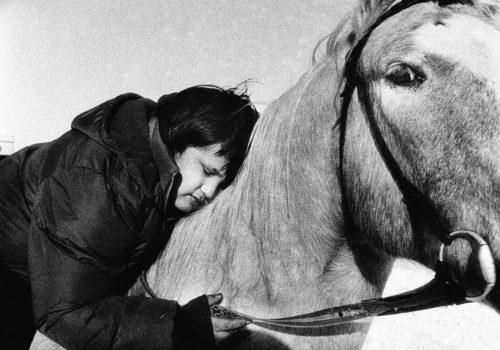
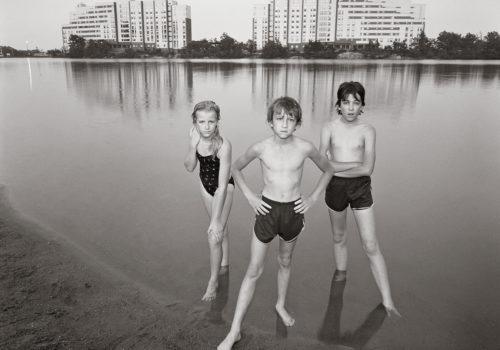
It seems a long time ago, when with excitement I watched Wim Wenders’ Buena Vista Social Club on the silver screen, with my body shaking to the hot and spicy rhythm of danzón, rumba and chachacha, my eyes squinting in the bright tropical light of the island…I was based in Singapore in those days, and I remember the sensation of the burning sun on my tee shirt glued to my back by sweat, before I shivered of cold in a chilly air-con cinema. American-born photographer Jill Hartley has been working between Mexico and France. Her “Suite Cubana” (Créaphis Editions 2025) is a refreshing photobook in a turquoise green cover. She delicately captured with her Leica a somewhat nostalgic Cuba in black and white, in the years between 1998 and 2003, a timeless Havana, Matanza and other places that seemed to have not much changed from Fidel Catro’s post-revolutionary days of the 1960’s. Agnes Varda visited in December 1962 and she took note of wall slogans such as Fidel’s famous declaration “Patria o Muerte Venceremos” (the Homeland or Death, we will be victorious”), Marc Riboud came in 1963 and spent a month documenting the aftermath of a hurricane and he had a chance to photograph the Líder Máximo at close range during the US Cuba missile crisis. Since then, countless more photographers have been attracted to the peeling paint and nostalgic ambience.
Jill Hartley gave the title “Suite cubana”, that seems to suggest a series and a music composition like Bach’s French Suite and English Suite. Walking with Jill down the streets of Havana and Matanzas, we take pleasure in absorbing the vernacular photography of of ordinary Cubans, everything happened in the streets, where she collected the portraits of a coffee seller, a peanut vender, a violinist, sensuous Cuban women, teenage girls dressed for a religious rite, dancers in a ballroom. She even caught glimpses of Cuba’s national sport: kids with boxing gloves and others with baseball bats and gloves: let’s not forget Cuba has won a total of 80 Olympic gold medals in boxing and three medals in baseball (!) even Fidel Castro was a proud baseball player. Jill said: “all the boys played wherever and with whatever they could find.”
Besides boxing and baseball and music, Cuba gained a worldwide reputation with their doctors and ophthalmologists. As health care and medical school are free in Cuba, well-trained doctors and ophthalmologists are often sent to other countries lacking in medical personnel, since 1963 Cuba has exported one hundred and forty thousand doctors, an especially lucrative export for a country that has continually suffered from US embargo. While tobacco (cigars) and sugar used to be Cuba’s traditional exports, Jill Hartley’s picture of an old and tired guajiro (a peasant) sitting with a machete between his feet appears as an anachronic portrait of the army of sugarcane cutters from memorial times.
Since the days of John F, Kennedy, the world has remained mesmerized by the lasting antagonism and animosity from the USA towards Cuba, while these old and patched together vintage Chevy or Buicks still roam the streets of Havana and other towns, they remind us of the long-forgotten bond between the USA and Cuba.
Do we expect a “suite” to the Suite cubana once the threats of missiles and drones will be muted and the specter of a US invasion becomes an illusion? We are not so reassured as Jill shows us a wooden structure named “Anti-tanque” made for blocking invading Yankee tanks, and a menacing metal alarm disc reminding neighborhood of the possible arrival of the Yankees. (They have been preparing for an imminent invasion for sixty years.) Besides a big painted sign “Revolucion” on a wall that reminds us of Fidel’s passionate call “Patria o Muerte”, we can see two boys playing marbles wearing a handkerchief exactly as in the image of young little red guards during China’s Cultural Revolution.
Jean Loh / April 2026
Born in 1950, Jill Hartley studied at UCLA Art Center College of Design and graduated from the University of Illinois at Chicago. A Freelance Photographer for numerous magazines and journals. Her published books include: “Poland” Editions Créaphis 1995, “Loteria fotografica mexicana” Petra Ediciones Mexico 1995-99-2008, and « Suite Cubana » Créaphis Paris 2025, plus three self-published books and a dozen photo albums for Petra Ediciones in Mexico. She is included in the PhotoPoche anthology “Women Photographers” Actes Sud 2020, “For thirty years, I photographed with a Leica and TriX film, all around the world but especially in Poland, Mexico and Cuba, each of which became the subject of a book.”