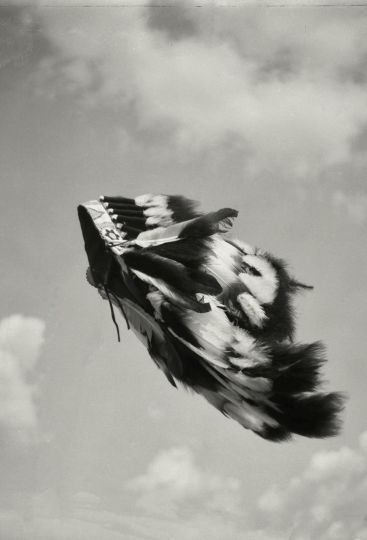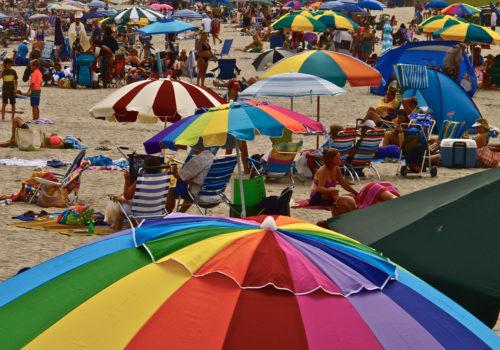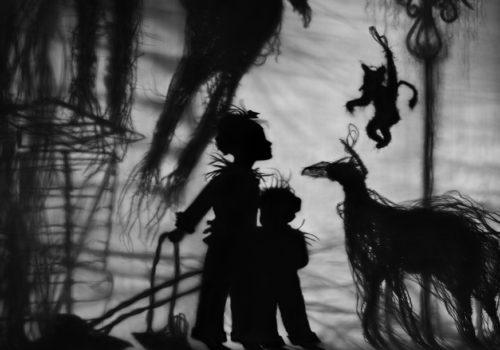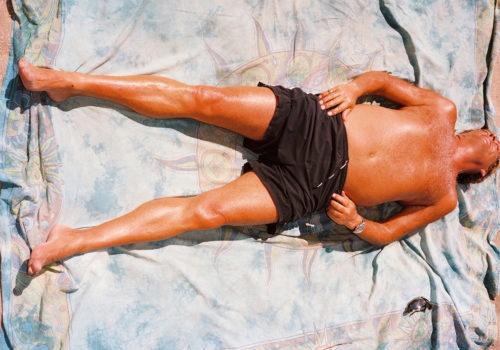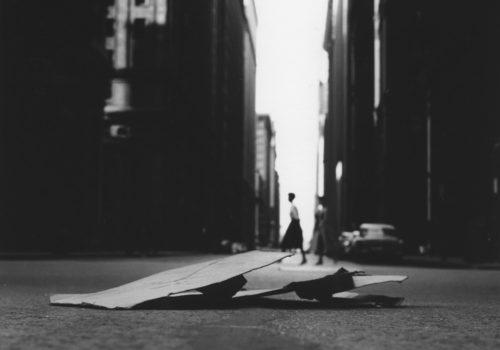
Ray K. Metzker is one of the most fascinating figures in the history of photography, but isn’t widely known. The literature on him is scarce, even though several highly sought-after publications were released during his lifetime. Until recently, things had remained quiet, but the publication *City Lux*, marking the exhibition of the same name at Fondation A in Brussels in 2024 – curated by Françoise Morin and Philippe Séclier, with texts by Carrie Springer, former curator of the Whitney Museum of American Art, and Vicki Harris, head of the Metzker Estate has changed all that. The first edition sold out quickly, and to mark the second edition, we take a moment to reflect on Metzker and the book.
Metzker studied at the Chicago Institute of Design (CID) and thus, in a sense, at the Bauhaus. The CID was founded in 1937 under the name New Bauhaus by László Moholy-Nagy, one of the original teachers at Weimar and Dessau. Metzker himself was taught by Harry Callahan and Aaron Siskind[1], who had a profound influence on his work and his thinking.
The young photographer did not opt for reportage or documentary, but gave photography a personal interpretation. And he did not seek this in distant horizons, but found his subject in his own surroundings the city. Initially, he produced individual images of great expressiveness, and from 1964 onwards the emphasis shifted to a search for a new visual language. He combined images into complex compositions, and eventually into three-dimensional objects.
Through his experiments, he continually re-evaluates his work, thereby arriving at new creative perspectives. Yet experimentation in the style of Man Ray did not appeal to him: he did not allow himself to be guided by chance; on the contrary, he seeked out structures and patterns. In making this choice, he was in fact reconnecting with the Bauhaus where students were advised not to imitate reality but to draw inspiration from it.
One could argue that he made the city his own, recasting it as a graphic composition. For Metzker, the city was not the human habitat people appear only incidentally but an abstract space, an accumulation of volumes, shadows and, above all, light.
Light is the most important building block in his oeuvre: it lends the blacks their deep tones. The light you perceive somewhere in the background. The light that peeks through ever so slightly, just enough to give an image structure, form and meaning. A courtyard illuminated by light from an alleyway. Light reflecting off a off a sailor’s cap. And in all the images, precise, measured, with a sense of proportion.
Metzker is a child of his time. Very early on, he travelled through Europe in a VW Beetle. But it was there, and in the US, that he became acquainted with the avant-garde movements.
He was influenced by Pop Art and Minimalist Art, but also by kinetic art. One cannot ignore the similarities with Op Art and the graphic art of the 1960s. The contrasts and deep blacks draw parallels with, for example, the photography of Mario Giacomelli (Italy, 1925–2000) or Fan Ho (Hong Kong, 1931–2016), and with the experiments of Provoke (1968–69).
Every now and then you hear someone sighing and wondering whether photography really deserves a place in the arts, and then I find myself thinking that nobody raises this question about a novel (because people realise that a piece in a magazine is just a collection of notes with no literary value whatsoever). Metzker did not take notes; he was an artist, and he deserves international recognition. For Ray K Metzker built up a magnificent body of work, was admired by Szarkowski and Friedlander, received two Guggenheim Fellowships, exhibited at the ICP and the MOMA, but above all, he showed the way for every budding photographer:
- Learn to look;
- Ask yourself what you’re going to do with those impressions, how far you can take them?
- How are you going to go about it, what’s your strategy?
- How do you develop your sense of exploration and experimentation?
- How do I arrive at the dynamic process whereby I continually evolve by critically evaluating my work time and again?
- How do I get a feel for what’s happening in my own time, including artistic movements (and not just photography!!!)
The book (and all the upcoming exhibitions) come highly recommended
John Devos
[email protected]
Ray K. Metzker. City Lux
Carrie Springer, Vicki Harris, Philippe Séclier, Françoise Morin
English, Ludion, Hardback, 240 pp (including over 150 black-and-white photographs), 24 x 27.3 cm (10.7 x 1 x 9.4 inches)
€45, ISBN 978-94-6478-117-5
September 2025, second edition April 2026!
[1] They are themselves the subject of an exhibition, *Photography as a Way of Life*, at the Princeton University Art Museum until 19 September 2026, and thereafter from 9 October to 7 February 2027 at the High Museum of Art in Atlanta, and at the Addison Gallery of American Art in Andover from 13 March 2027 to 31 July 2027. They represent photography as an artistic form of expression, and one might regard them as the American counterparts to subjective photography in Europe.