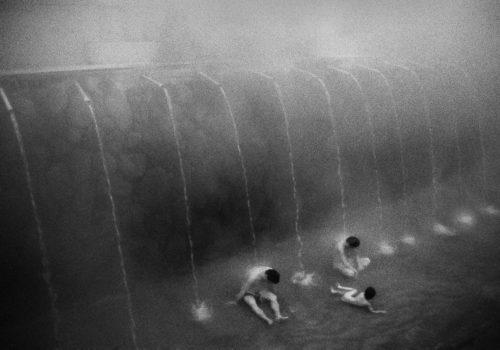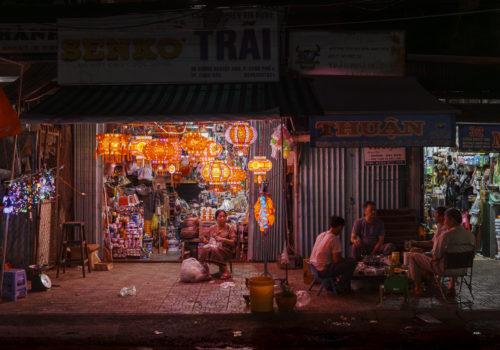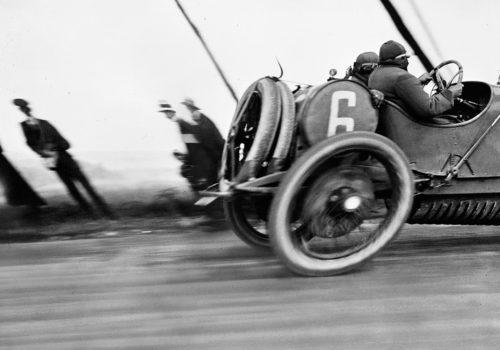
Long confined to the labels of photographer of the Belle Époque, or, more simply, photographer of happiness, Jacques Henri Lartigue yet defies all these oversimplifications.. Behind the apparent lightness of his images lies the work of an author who never stopped making his own life, the lives of those close to him, and the people he loved, the very material of his art.
Born in 1894, he received his first camera while still a child. Like many amateurs of the early century, he first photographed his family, games, holidays, his brother’s aeronautical exploits, fashionable society, and sunlit Sundays. Very early on, he devised a game he called the eye trap (le piège d’œil): closing and then reopening his eyes to conjure a frame, hold onto a scene, capture a vision before it slipped away. This childhood intuition foreshadowed a strikingly modern approach to photography framing reality, seizing the instant just as it was about to vanish.
While Lartigue also practiced painting, which he considered better suited to capturing the essence of things, photography offered him another power: that of holding onto time. It became the diary of his existence. From childhood on, he wrote daily, recorded his impressions, catalogued his negatives. In his journal, he articulated early on what would remain the guiding thread of his work: “It is not thoughts I wish to trap, but the scent of happiness”; he preserved not only what he saw, but what these moments left within him.
His entire body of work thus follows the course of his life. He photographed the women he loved those he married as well as those who merely passed through his life offering them, through photography, a form of eternity. Family, friends, children, automobiles, sports, travel: for Lartigue, nothing belongs to the grand event, and everything is an event. Together, they form an intimate chronicle in which beauty arises precisely from the ordinary, when lived with intensity.
Even when he covered the first Cannes Film Festival in 1946, he remained less drawn to reportage than to the suspended moments the event allowed to surface. In his own eyes, photography remained above all an art of lived experience.
This fidelity to the everyday no doubt explains the misunderstanding that has long accompanied his work. His lightness is never an escape from the world. It reflects, rather, a kind of moral elegance one that consists of choosing, against all odds, to hold onto moments of grace rather than wounds, and to preserve the memory of fragile instants. For Lartigue, living and photographing are, in the end, one and the same.
Jean-Jacques Ader
Exhibition Jacques Henri Lartigue “L’œil absolu” Part 1, June 26 to September 30, 2026, at Le Parvis, Espace culturel E. Leclerc de Pau (64). Artistic director Marc Bélit. Information: https://www.leparvispau.com/