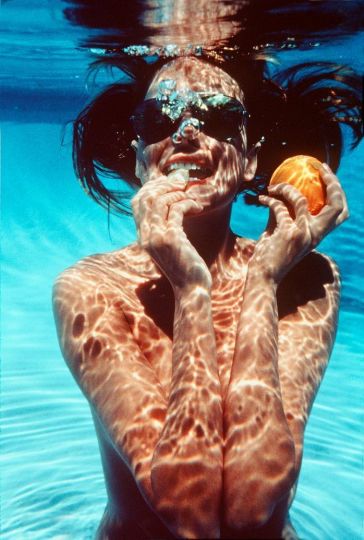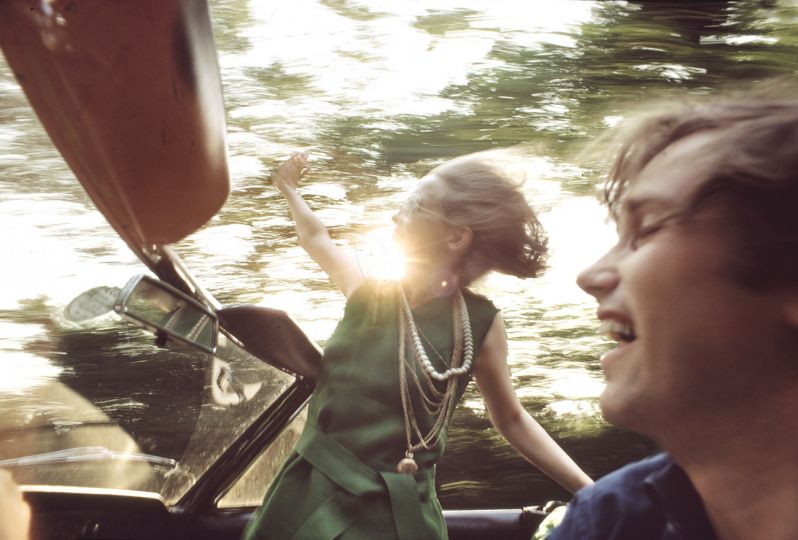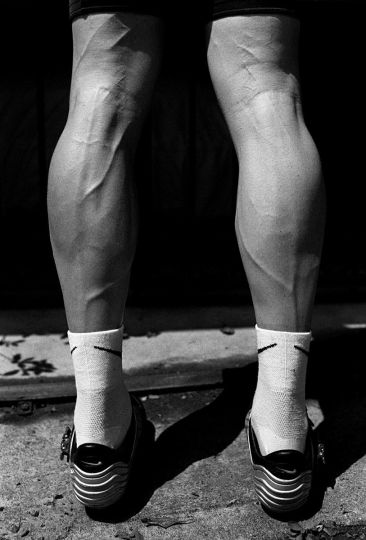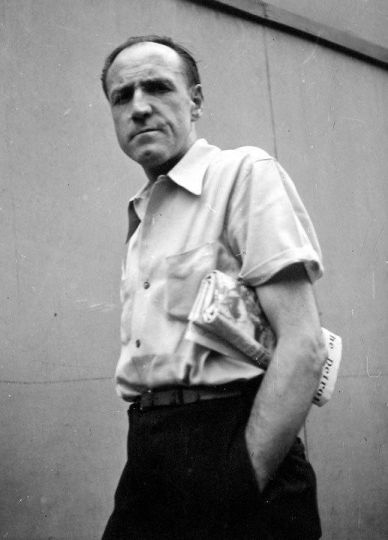
Humanist photography is a bit like what the realistic song is to song: an attention paid to human beings, to the social context of an era, and a refusal of sophistication. While, on the musical side, there are a majority of female singers who have distinguished themselves, it is rather male photographers who have been remembered at the beginning of this movement, Henri Cartier-Bresson, Robert Doisneau, and Willy Ronis (1910-2009). It is the latter who is therefore honored at the Parvis de Pau – the E. Leclerc cultural space – thanks to the collection of the Médiathèque du Patrimoine et de la Photographie. Indeed, Ronis donated his work to the French state first in the 1980s, then in 2006.
At the crossroads of several practices, he was both a photojournalist—he joined the Rapho agency in 1946 a portraitist and a street photographer, and he completed numerous commissions for magazines such as Le Monde Illustré, Time, Life, Vogue, L’Écran français, and Point de vue.
“Willy Ronis’s photographs are captured in a particular moment, with marvelous light, and it is perhaps one of the pinnacles of black and white photography. His gaze is imbued with the human warmth and sensitivity that are the unique hallmarks of his so-called humanist photographic approach,” Marc Bélit, the venue’s artistic programmer, passionately tells us.
Ronis documented the life of the parisians as much as the daily life of the workers and their struggles, the sweetness of life on the banks of the Marne, the life in the cafés or the lovers strolling in the gardens; a photographer of intimacy, of social relations, always maintaining his modest distance from his subjects. The entire exhibition therefore reminds us of the empathy that the photographer felt towards his fellow citizens, and also bears witness to the harshness of an era with, throughout his life, a claimed social commitment. He will become close to the Communist Party, will publish in L’Humanité or in Regards and will confide “The photographer can denounce things, but he must not have the pretension to change them”.
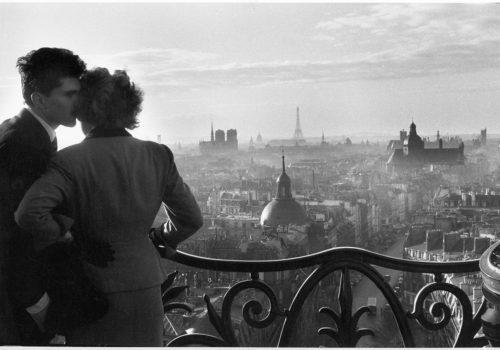
Many visitors will recognize the child running with a baguette, taller than he is, under his arm; the lovers overlooking Paris from the top of the Bastille column; the female nude bathed in the Provençal sun; and some will finally be able to put a name to these images that are part of the French visual imagination.
Eighty-one images are presented to us in this exhibition, all from the approximately six hundred reference prints that Ronis himself selected from his collection, thus forming the quintessence of his work. This series will remain his photographic testament.
Jean-Jacques Ader
“Willy Ronis by Willy Ronis” photography exhibition at the Parvis, Espace Culturel E. Leclerc de Pau, avenue Louis Sallenave (64000) until June 24, 2025, free entry.
Information: https://www.leparvispau.com/