Avedon chosen by Avedon
Selected and laid out by himself for our magazine, these images of Richard Avedon mark the publication, by Denoël-Filipacchi, of an important book (Avedon Photographs 1947-1977), at the same time as the exhibition at the Metropolitan Museum in New York traces thirty years of the career of this giant of fashion photography. On this occasion, Edmonde Charles-Roux, former editor-in-chief of Vogue, kindly agreed, and we thank her warmly, to talk to us about what she aptly calls “extremism according to Avedon.” She recalls: “People spoke of him in terms usually reserved for stars. It was in 1965, the year he decided to leave Harper’s Bazaar.” In Paris, at the headquarters of the French edition of “Vogue” where I was editor-in-chief, news spread like lightning: not only was Avedon turning his back on the world of his beginnings, and this after twenty years of presence within that bible of Fashion that was “Bazaar”, not only was he moving away from the universe into which his discoverer and aging master, Alexei Brodovitch, sacred monster of page layout, had introduced him, he was doing worse, he was “going over” to the competition. Avedon was signing a contract with “Vogue”. I knew him by sight, of course.
New York: This Avedon exhibition was the event of the year
Every year, when Parisian haute couture presented its collections, we would find ourselves, according to an immutable protocol, the staring in each other faces of the editorial team of Vogue and Harper’s Bazaar, The great couturiers, in a very French way, considered it their duty to put as much distance between us as possible. Working for competing magazines, we could only be enemies. Placed each on one side of the paddock where the models were turning, we glimpsed each other in these salons whose audience, observed year after year the fashion which lengthened, shortened, rounded, flattened, the hairstyles which changed, curled, pulled, twisted, and agitated the space surrounded by eyes which swept sometimes the light breeze of muslin, sometimes the heavy waves of satin. Between two bursts, I saw Avedon, a tiny man with a gigantic reputation, who, sitting next to the formidable Carmel Snow, looked like a student his grandmother had taken on a visit. I knew about him what was common knowledge, which was to say almost everything his photographs revealed, and almost nothing about the man. I knew, needless to say, the dazzling anthology of his sequences for the “Bazaar” and in a very different order, the other side of Avedon, the one that appeared in his two albums, the only ones released at the time, “Observations”, which Truman Capote had given me, and “Nothing Personal”, widely denigrated in the world of Parisian fashion and in the world in general where one saw in this attempt to delve into the heart of mental illness only a rather shocking misstep of which this magician of beauty was guilty, an error in short which revealed on the part of its author a rather disturbing form of voyeurism.
For my part, “Nothing Personal” had confirmed my conviction that Avedon was not only a brilliant promoter of illusions, a showman, a fashion photographer admirably able to give dimension to the ephemeral, but that there was, somewhere within him, an unknown, a double-edged Avedon, a singular man, as sensitive to charm as to anti-charm, to beauty as to decrepitude. Our first meeting confirmed this opinion. Intensely preoccupied by his work organizing sessions, mastering imponderables as much as possible, ensuring high-quality technical assistance and, in this area, showing himself to be extremely demanding Avedon was not, however, limited to this. He escaped the narrow world of the great stars of fashion photography. During a lunch and the long conversation that ensued—a casual tour d’horizon in which we discussed both a portrait project to which he attached great importance, that of Claude and Paloma Picasso, and our mutual myopia, which we both agreed constituted a constant solicitation of the imagination—I had noted no formalism in Avedon. He did not play the star, and I found him persuasive even in his silences. No less important to me was that beneath the sparkle of his gaze and his unalterable appetite for capturing life, there was, poorly concealed, a secret depth of anxiety.
Fourteen years have passed since that memorable encounter, and it is this aspect of Avedon that still seems essential to me today. Avedon’s childhood was so classically New York that it seems self-evident. His father was Jacob Israel, an emigrant, born on the ship that brought Jews from Russia to America. And this emigrant father grew up in an orphanage. This did not prevent him, many years later, at the time of his marriage to Anne Polansky and the birth of his son, from enjoying a comfortable life and a remunerative activity in the clothing industry… oh America! Well-housed, he raised little Richard with the idea that to succeed, one needed education. Fate, in short, smiled on the Avedons… A short-lived respite. The Depression very quickly took care of leaving parents and children to make ends meet and to live in less elegant neighborhoods. But the tenacious Jacob Israel held out hope that Richard would one day shine in the business world (which came true), while the joyful and inventive Anna secretly cherished the idea of making him an artist (which also came true). Alas, their young man had his own way. He was a terrible student and stood out in only one activity: autograph hunting, already showing an undeniable attraction for celebrities. At seventeen, he decided to leave his family, abandon his studies, and embark on life without a single diploma. His father predicted a dismal future for him: he would join the army of illiterates and end up as a taxi driver. Richard Avedon paid no attention to these gloomy predictions. Two paths were open to him: poetry and photography. When in doubt, he practiced both. The war would not give him time to choose.
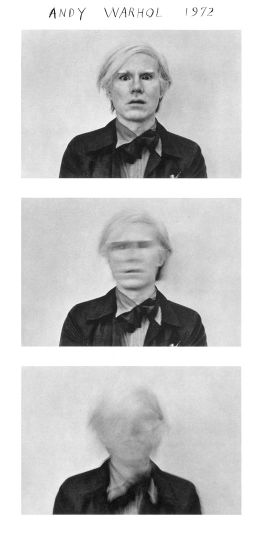
Armed with the Rolleiflex that Jacob Israel had given him as a farewell gift, Avedon enlisted in the Merchant Marines, where he was tasked with producing identity photos for new recruits. He performed this task conscientiously, while occupying his spare time with less tedious research. Thus, he captured the silhouettes of two young recruits, two brothers, in their sailor uniforms. One was photographed with the utmost clarity, the other was left blurred to the point of appearing imaginary. After his discharge, Avedon opted for fashion photography and worked successfully for the department store, Bonwitt Teller, where his photos were displayed in the elevators. Until the day he made a selection of his best fashion documents, added to this selection a few images taken during his time as a sailor, and went to submit them all to the judgment of the greatest connoisseur in the field: Alexei Brodovitch, artistic director of Harper’s Bazaar. Richard Avedon’s future was largely decided during this visit. Curiously, it wasn’t the fashion photos that caught his judge’s attention, but the photo of the two brothers in uniform. The document had a freshness and spontaneity that Brodovitch considered promising. Harper’s Bazaar hired Avedon, and it was Brodovitch who trained him.
Avedon is today a young man of fifty-six whose career is developing on at least three levels at once. Fashion photography, his creative work, for which he is famous for his mastery, his imagination in staging the unusual, this particular ability he has to organize a perpetual “happening” around each chosen model, and this force of renewal that he also has and which constantly makes him another and always the same for Avedon, if he changes his manner, never changes his style. Let us then mention his remunerative work, advertising, where, independently of his artistic success, Avedon also achieves prodigious success. When Revlon, Polaroid, Schweppes, or CBS decide to approach him, they know that what they expect one of those striking documents where color bursts out against a simple white background, will only be obtained at the price of an unsurpassed salary: $5,000 per session. Finally, there is an Avedon portraitist, provocative in the way the Dadaists were, the man who demystifies celebrity and dares to show it as age modifies and accuses it, the man through whom scandal arrives because he has decided once and for all to follow through with his message, even if it means shocking. The album that appears in France under the single title “Avedon” allows us to recognize him in all these aspects. Few, if any, men in these pages that read like a hymn to the beauty of women between 1947 and 1977. The man is only a foil around which the photo is “orchestrated.” He is not chained like the elephants in the famous image where Dovima, between two pachyderms, presents a Dior dress; nor is he held at the end of a leash like the dog Bruno who opens his wide mouth in Veronica Compton’s face; finally, he does not prostrate himself like the camel who kneels before both a pretty dress and a pretty girl (Dovima, always her); no, but in his own way, he too pays his tribute to triumphant beauty. He twirls, he supports, he embraces, he kisses, he protects, he toasts, he shelters, he plays a big game, he throws himself at the neck of beauty at the cost of a dangerous glide, and everything leads us to suppose that he is not fooled.
Certainly, he is still there, but in the manner of utilities, and the leading role is in no way his. It never will be. The star is held by the all-powerful deity called photogénie, this pitiless person in whose service he finds himself, just like the author of these photos, just like Avedon himself, leaning over his Rolleiflex and also enslaved, and also aware that nothing lasts and that one must act quickly. The name of the one who “holds him” does not matter. Whether she is called Dorian, Suzy, Dovima, Carmen, Barbara, Twiggy, Luna, Ingrid or Penelope, she is always the cause of drama. And God knows that Avedon is a master in this matter!
Each page of this album, under the guise of frivolity, presents us with frightening confrontations. There is the designer’s impudent control over his creation: Chanel and Suzy Parker. There is the death knell of the star, victim of her notoriety and pursued by the paparazzi. There is a great high-society beauty caught in her own game and mummified in a sort of Proustian pre-death. There is the nostalgia for the passing of time and the triumphant naturalness of a disrespectful youth which, like a bell tolling, announces to anyone who will listen the end of the sophistications and prettiness of yesteryear. So many images to look at, so many stories to “read,” so many mysteries to decipher. Rare are the artists who go to the very end of what they set out to describe. And this without concessions, whatever the cost, and even if they were to be consumed in what Cocteau called “the fires of professional hell.” Avedon is one of them. I salute everything in him that so happily escapes the rules of good taste and common sense; in fact, I salute Avedon, the man of extremes.
Edmonde Charles-Roux