Nearly two centuries after the introduction of photography to China, the Shanghai Minsheng Art Museum presented the exhibition Shanghai: Capital of Photography, 1910s-2020s from December 25, 2024 to June 8, 2025. This exhibition traced more than a century of interactions between the city and photography, exploring the historical developments and profound transformations that both Shanghai and the medium have undergone.
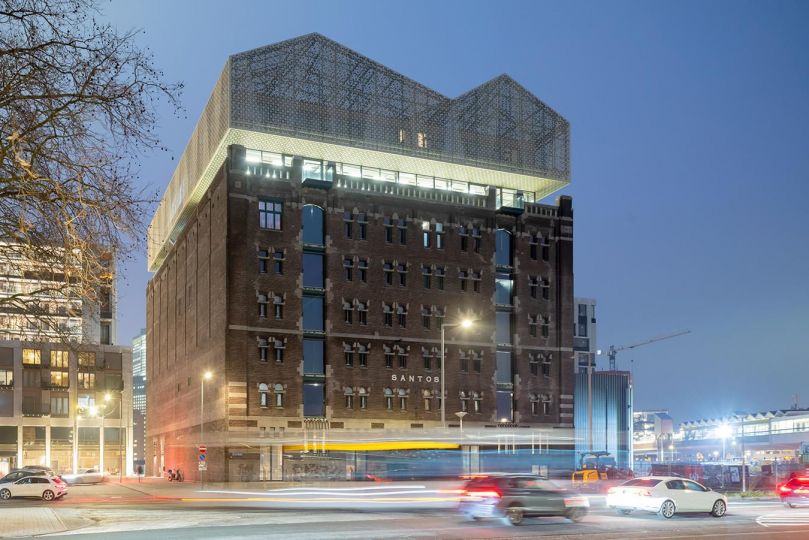
Since moving into its new premises in 2024, the museum has affirmed its commitment to urban and local cultures. Following the inaugural exhibition, Animating China: A History of Shanghai Animated Films, this new exhibition delved deeper into the connections between urban imagery and cultural memory.
Curated by Fudan University professor Gu Zheng, the exhibition featured 268 works by 35 photographers and artists who lived and worked in Shanghai, as well as over 80 archival documents and objects. Organized into four main sections—“Pioneers of Light and Shadow,” “Documentary Perspectives and Beyond,” “Various Representations,” and “Special Presentation”—and subdivided into eight thematic units, it offered a chronological and thematic reading of how Shanghai has been observed, thought about, and represented through the lens of photography.
Photography was introduced to China in 1842, with the opening of the port of Shanghai. In its early days, it was mainly Western photographers who opened studios in port cities, before local photographers quickly established themselves in other regions. By the 1870s, Shanghai already had several studios founded by Chinese people, and by the end of the 19th century, a generation of local photographers with professional and technical standards had begun to develop. In the 20th century, as Shanghai established itself as a thriving industrial and commercial city, it also became a focal point for photography in China (1).
The city was also the birthplace of important historical events in modern China, such as the May Fourth (2) Movement and the New Culture Movement (3). During the Republic of China (1911–1949), many independent photographers emerged.
The first section of the exhibition, Pioneers of Light and Shadow, opened with an iconic photograph by Ding Song, Outdoor Sketching Activities of Students at the Shanghai Longhua School of Fine Arts. This image marks the beginning of the exploration of modern photography in China, between the 1910s and the 1940s.
In the Special Presentation section, the museum, with the support of the Shanghai Museum of Old Camera Manufacturing, presented cameras of the Chinese brand Seagull, produced in Shanghai since 1958. The creation of these cameras not only catered to the domestic market, but also drove the independent development and technological innovation of the Chinese photography industry.
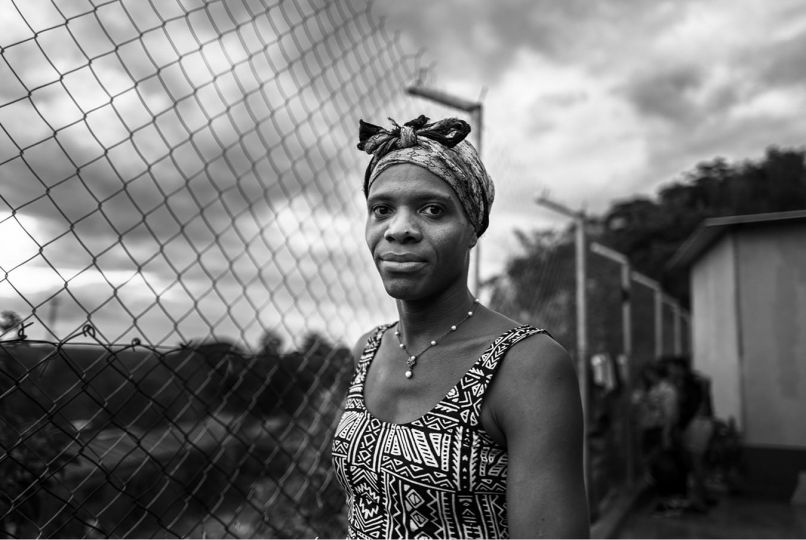
A pioneer of Reform and Opening Up (4), Shanghai underwent profound economic and social changes in the 1990s. Works such as Yong He’s Expressions of Shanghai at the Turn of the Century, Xu Haifeng’s Shanghai Shenyin Wanguo Securities Business Department, and Hou Jianhua’s Subway Series demonstrate the photographers’ attentive and intuitive approach to the upheavals of the time. Their images capture a society in full transformation, dynamic yet agitated.
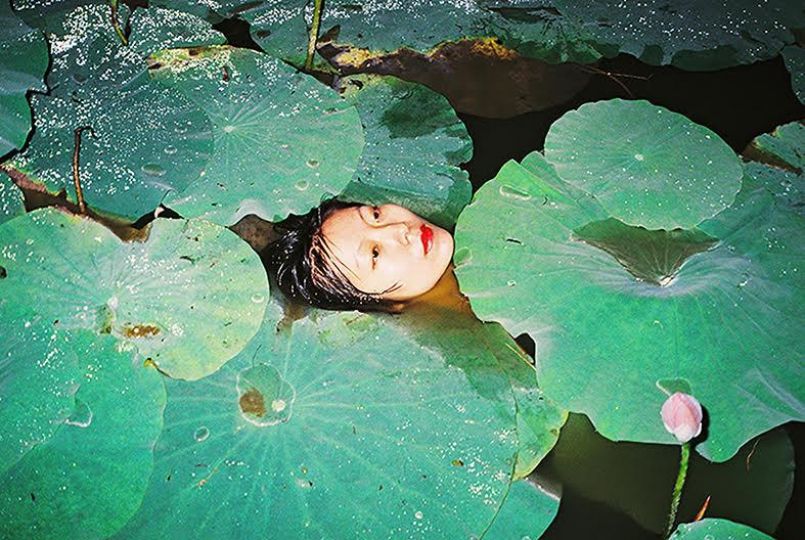
The Visual Experiments and Fictitious Scenes units of the Diverse Representations section highlight exploratory approaches to contemporary photography, through the works of Pixy Liao, Zhang Enli, and Yang Fudong, among others. Through their formal and spatial experiments, these artists offer new ways of thinking about Shanghai and its imagination. Pixy Liao, the only female artist in the exhibition, questions gender norms in her work The Photographer and Her Muse I, exploring the complexity of intimate relationships. Originally from Shanghai, she offers a gendered reading of the “Shanghai spirit” that enriches the visual discourse of the exhibition.
Running through the entire exhibition was a reflection on the many ways in which several generations of photographers have depicted Shanghai a city in perpetual evolution while showing how photography itself has been nourished, transformed, and renewed by its urban roots. Here, photography is not just a tool for documentation: it is a language, a vector of memory, a fundamental component of urban culture.
As the exhibition curator, Gu Zheng, points out: “Photography and Shanghai complement each other.” In an interview with The Paper, he emphasizes the cross-cultural dynamism of the city’s photographic ecosystem, driven by the recent emergence of new institutions and exhibition spaces. This revival is making the local photography scene more vibrant and diverse. In this sense, Shanghai is truly the capital of photography (5).
The exhibition Shanghai: Capital of Photography thus constitutes both a unique visual archive of the city’s photographic history and a multifaceted prism through which to interpret its social transformations and the evolution of artistic language. However, the marked absence of female artists highlights the need to continue critically examining the implicit structures and power asymmetries embedded in the historiography of photography.
Deng Qiwen
Exhibited artists : Ding Song, Lang Jingshan, Tao Lengyue, Dan Duyu, Zhuang Xueben, Jin Shisheng, Sha Fei, Lu Yuanmin, Zhang Chunhai, Yong He, Xu Haifeng, Guo Bo, Gu Zheng, Shen Haopeng, Yan Yibo, Zhou Ming, Hou Jianhua, Zhu Hao, Jin Jiangbo, Birdhead, Xu Xin, Hu Jieming, Zheng Zhiyuan, Chen Ronghui, Qin Yifeng, Shi Yong, Luo Yongjin, Zhang Enli, Pixy Liao, Ni Youyu, Hu Weiyi, Yang Fudong, Ma Liang, Zhou Yulong, Yang Yongliang.
Shanghai: Capital of Photography, 1910s-2020s
From December 25, 2024 to June 8, 2025
Shanghai Minsheng Art Museum
No. 48 Weihai Road, Huangpu District, Shanghai, China
Exhibition open Tuesday to Sunday, 10 a.m. to 6 p.m.
http://minshengart.com/
(1) Ma Yunzeng, Chen Shen, Hu Zhichuan, Qian Zhangbiao, Peng Yongxiang, History of Chinese Photography, 1840–1937. Beijing: China Photography Publishing, 1987, 342 pp.
(2) The May Fourth Movement of 1919 was a political and cultural movement led by students in Beijing to protest the Treaty of Versailles and call for national modernization based on science and democracy.
(3) The New Culture Movement (1915–1925) was an intellectual movement that advocated the reform of Chinese society through the promotion of science, democracy, the vernacular language, and Western progressive values.
(4) Reform and Opening period, launched by Deng Xiaoping in 1978, refers to a series of economic and social reforms aimed at modernizing China and integrating it into the world economy.
(5) Wu Dong, Gao Jianping, “Interview with Gu Zheng: Shanghai, a metropolis that saw the birth of photographic development”, The Paper, December 27, 2024. Online: https://www.thepaper.cn/newsDetail_forward_29762293