From April 6 to June 6, 2025, AFTERART PHOTOLAB in Shanghai inaugurate dits exhibition space with the exhibition Nong Hao (1), Photographs by Ryoji Akiyama, which featured more than twenty photographs from the series Dear Old Days, created by Japanese photographer Ryoji Akiyama in the early 1980s in China.
Born in Tokyo in 1942, Ryōji Akiyama is the son of photographer Celadon Akiyama. A graduate of the Faculty of Arts at Waseda University, he worked in the photo department of the Associated Press and later for the daily newspaper Asahi Shimbun. His works are held in several prestigious institutions, such as the Museum of Modern Art in New York, the Tokyo Photographic Art Museum, the Miyagi Prefectural Museum of Art, and the Kure Municipal Museum of Art.
Between October 1981 and June 1982, at the age of 40, Akiyama was commissioned by the Japanese company Konica Minolta to travel to China to promote the “Sakura” color film, at a time when black and white was still dominant. With the support of the China Photographers Association, he visited the country five times over eight months, visiting twelve cities including Beijing, Shanghai, Kunming, Chengdu, Hohhot, and Ürümqi. Equipped with a Rolleiflex and film limiting each roll to 12 exposures, he captured more than 8,000 images on over 700 rolls.
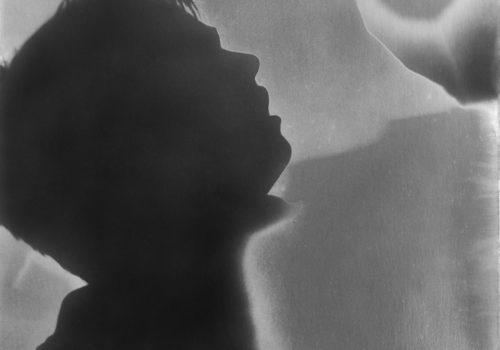
Through careful observation and meticulous documentation of the daily lives of Chinese children at the beginning of the Reform and Opening period (2), Ryoji Akiyama captures the freedom and vitality that emanated from these children.
Frank gazes, innocent smiles, natural gestures: his young subjects, bathed in the light of the streets and alleys, embody the tranquility and hope of this era. Their silhouettes blend into the cities and bustling crowds, becoming silent witnesses to a collective memory specific to the 1980s.
“Children are like photographic paper, like light: they reveal adults. Photographing children is also photographing adults. Looking at them, we perceive hope, but also the current state of the adults we are.
Digital cameras encourage excessive snapshots, an overabundance I oppose. Photography is, above all, a moment—capturing it requires a lot of effort.”
- Ryoji Akiyama
In 1982, he published Dear Old Days, a collection of these photographs. The following year, he published the photo book Hello, Little Friends – Chinese children (Chūgoku no kodomotachi: Akiyama Ryoji shashinshū) simultaneously in Japan and China. In 2015, a Chinese internet user shared some of these images on social media, sparking an unexpected collective emotion. This enthusiasm led to the reissue of Hello, Little Friends by the Japanese publishing house Seisodo in 2019. The following year, on the occasion of Children’s Day (June 1), Seisodo published a second volume, Dear Old Days II, composed of 122 previously unpublished images found in a dusty box in the artist’s attic.
AFTERART PHOTOLAB
AFTERART PHOTOLAB is a space dedicated to film photography, located in the Jing’an district of Shanghai. In addition to its exhibitions, it offers custom framing, color and black-and-white film processing and scanning, as well as mechanical processing of motion picture films.
The space also has a darkroom and plans to soon offer color and black-and-white printing classes. Photo book readings, workshops, and meetings will gradually enrich the program, making this laboratory a true place of sharing and creation for photography enthusiasts and professionals alike.
Deng Qiwen
Nong Hao, Ryoji Akiyama Photography Exhibition
April 4 to June 6, 2025
AFTERART PHOTOLAB
No. 22 North Fujian Rd, Jing’an District, Shanghai, China
Exhibition open daily, 10:30 a.m. to 6:00 p.m.
http://xhslink.com/a/hgNgbdvjb4Zcb
(1) “Nong Hao” (侬好) is a greeting in the Shanghainese dialect, meaning “Hello” or “Hello.”
(2) The Reform and Opening Up, launched by Deng Xiaoping in 1978, refers to a series of economic and social reforms aimed at modernizing China and integrating it into the global economy.