Our collaborator Jean Loh was informed that Robert Van Der Hilst passed away peacefully at his home in Paris, on the eve of the Saint Valentin. He sent us this text.
I met Robert Van Der Hilst for the first time at the 4th Pingyao Photo Festival, having attended in 2001, 2002 and 2003. In 2004 Robert was appointed by the organizers as the chairman of the Festival Jury. He also had an exhibition with his “Cuban Interior”. I have never heard his name before, since he was mostly working in North America and Latin America and was published in magazines such as Vogue, Stern and Geo, etc. Pingyao was the first time he came to China, and I began to connect him with different Chinese photographers spread out in far flung provinces, as he mentioned to everybody he wanted to work on a project he called “the Chinese Interior”. The concept was born when he was working in Cuba since 1987-1988, where the police surveillance soon noticed a tall slender Dutch photographer with blond hair, as a result he felt unsafe doing street photography and asked Cuban local people whether he could photograph them inside their home. It worked fine until he made an unforced error by setting up an exhibition in Paris with the collaboration of the exile Cuban writer Zoe Valdes who has been a anti-Castro activist. On his third visit to Cuba he was arrested at the Havana airport and declared persona non grata and expulsed. He learned later that he was denounced by Alberto Korda quasi official Cuban photographer famous for his portraits of Che Guevara. Unable to continue working in Cuba on Zoe Valdes’ suggestion he went to document the overseas Cubans living in Miami Florida and was rewarded with plenty of great pictures of true Cuban culture,
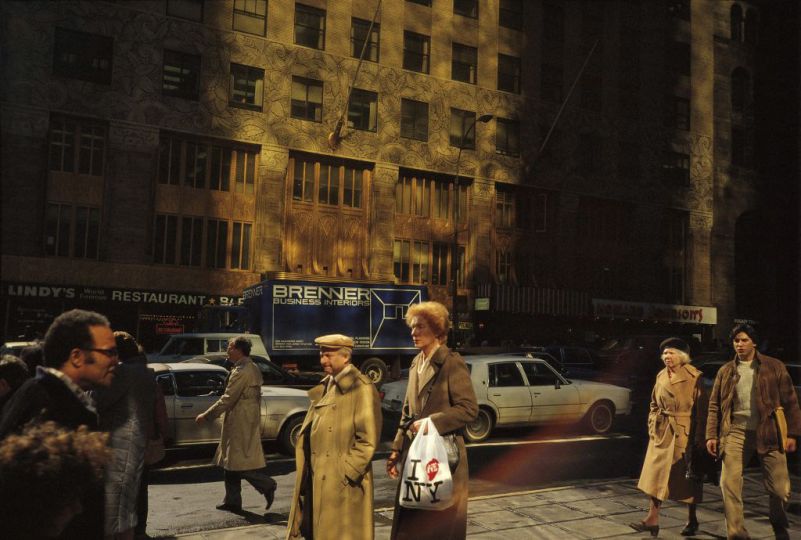
I saw that he worked exclusively in color, but he told me he started his career in Black and White photography until a fire burned down his home in Canada and destroyed all his B&W negatives. That explained why he turned to color photography ever since. While he showed me his early works I noticed one visual that looked like a B&W photo, he said no that was a color photograph but with the play on lighting and the composition it looked closer to a B&W one, I loved the blackness of this picture so much, first because it represents his passage from B&W to color, then because I saw two punctums that struck a chord with me, the picture represents the façade of the American Type Founders in New York City, as I had created a graphic design agency (named Beaugeste) I was deeply in love with the type faces and fonts. But in Robert’s photo there was a shadow on the pavement that looked like a cross (!), at that time I was immersed into searching for any spiritual meanings in photography. Robert saw my emotion, he decided to generously offer that print to me, signing off “Pour Jean” on the margin.
From 2005 as he returned to Pingyao for another exhibition of his Americana photography, I started to get more deeply involved in his work, especially around the theme of “Interior”. Robert traveled extensively in China, but this huge quantity of visuals did not have a logic or a thread. Until I told him, what I like in your photos are not the portraits of people or the night clubs and bars and city lights, it is the quietness I found in your rural interiors, of farmers sitting at home, or the range of traditional kitchen tools in the typical “still life”, Then I said our graphic design agency has a client called the Rabo Bank, which Robert was familiar with, a Dutch banking institution catering to agriculture business, sort of like the French Credit Agricole. If you want to embark on a long-term project of Chinese Interior you need a financial backing, therefore I designed a proposal for a sponsorship for Robert’s residential photography project in China. A monthly budget calculated with Chinese standard of living in the pre-World Expo years, travel cost and the per diem, etc.and in the end Rabo Bank accepts to sponsor your retrospective at the Shanghai Art Museum. I a then acompanied Robert to Rabo Bank’s HQ in Pudong and to announce the project to the Director and the curator of the Shanghai Art Museum.
In that setting Robert enjoyed his trips in and out Paris-Shanghai and happy in his rental apartment in Shanghai French Concession, close to my gallery and design studio.
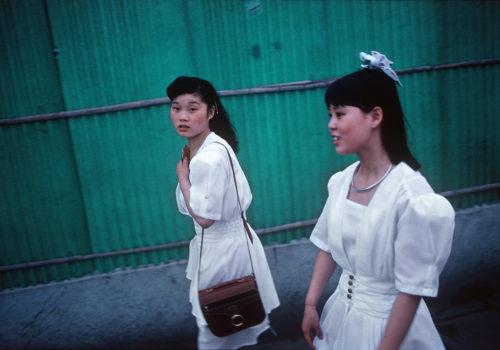
Retroactively I realized why his pictures of the Chinese Interiors were met with polite praise but little enthusiasm among Chinese audience and Chinese photographers. Beyond the cliché comparison that his photographs remind art lovers of Dutch paintings especially of Johanes Vermeer’s milkmaid (1660). The truth is much more basic, Chinese people are used to shy away from the past memories, and they do not want to remember their history of deprivation and poverty… They prefer to look at luxury world fashion branded boutiques or luxury car shows (the Three “I” (EEE) = Ferrari Lamborghini Maserati). That was in the pre-covid years, now with the profusion of EV cars and the collapse of real estate market, unemployment among the young workers, things have changed again, In that historical context Rob Van Der Hilst’s “Shanghai of the Nineties“ take on another level of reading. It is a lesson in nostalgia and a reflection on the sobriety instead of the endless pursuit of glamor and the “filthy rich”…
Jean Loh, February 15, 2026
Post scriptum
It was my Chinese friends who alerted me to Robert’s death. On the eve of Valentine’s Day, this sentimental Dutchman who loved women (many Chinese women?) slipped away without a sound; we will no longer hear the shutter release of his Mamiya on a tripod—the click that echoes in the near darkness of the interiors of Chinese peasants’ homes in Yunnan, in Sichuan… I accompanied him once during the Dali festival; he had the nerve to barge into people’s homes as if breaking and entering. Since he didn’t speak a word of Chinese, apart from the phrase BU YAO DONG (“don’t move”), because these interiors, with their extremely poor light, required an exposure time that only Robert knew how to master with his Mamiya on a tripod… Tall and wiry, with a handsome face and blond hair turning silver, Robert was an instinctive seducer… The peasants barely had time to register their surprise before Robert was already making himself scarce. A true hunter of instants from the lives of these Chinese peasants, Robert’s “Chinese interiors,” twenty or thirty years on, no longer exist—except in the pages of his catalogues—now that China has embarked on modernization at all costs, frenetic urbanization, and generalized concreting…