Dissolving Beauty
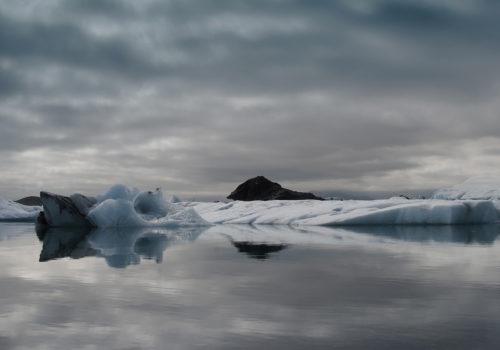
One of the most breathtaking sites in the world, the Jökulsárlón glacier lagoon. When I arrived there I was struck by the serene scene of iceberg-strewn waters of the lagoon itself. Spending my whole day in the lagoon was a very strong experience where silence was only interrupted by the sound of ice crackling. I was fully captured by an almost surreal visual dimension created by the dominance of water and ice which had a very limited colour palette: the low sunlight and contrasts enhanced the blue nuances and ice iridescences. In spite of its beauty, this stunning scene of drifting icebergs is created from the melting ice glacier of a tongue stretching south from the Vatnajökull, Iceland’s largest ice cap. The lagoon only emerged in 1934: since then, rising temperatures have caused the glacier to recede and the lagoon to expand. As the fourth summary report of the Scientific Committee on Climate Change published in October 2023 states, the glacier decline will be greater if gas emissions are not reduced, in line with the Paris Agreement. The moment we face is so critical that reducing emissions to reverse the effects of climate change needs total global and individual efforts.
As a matter of fact, the Jökulsárlón glacier lagoon is a dramatic landscape where you can witness the icy wall of the glacier collapse, and crumple into the water below. As such, it is the poignant product of a warming world. Moreover, because of the increasing number of tourists who want to get close to the icebergs, tour business is growing: everyday, hundreds of boats take visitors on around iceberg-studded waters, to witness a treasure vanish. As a photographer, I think it is an important task to show Nature’s dramatic condition and maybe to awaken those emotions that scientific reports and data are probably still unable to produce.