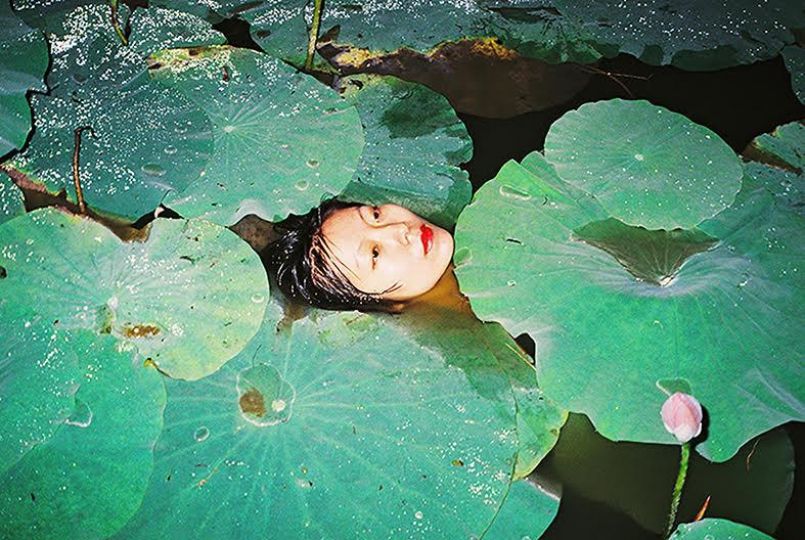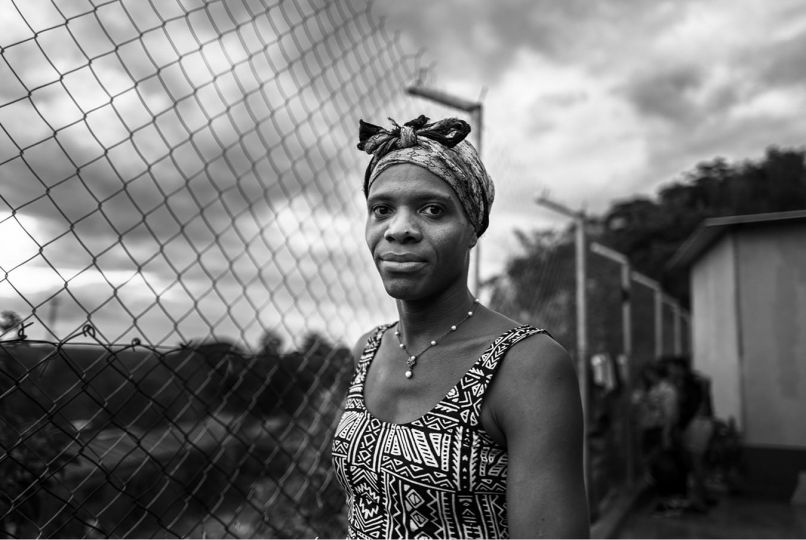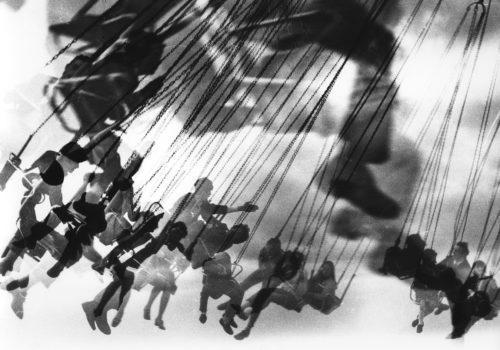
(N)ever Enough is the theme of the fourth edition of the Yeast Photo Festival. Until November 9, it’s transforming Matino and Salento (the easternmost part of Italy, in the Puglia region) into a visual atlas of the contradictions of our time: food is plentiful yet still denied to some. The photographic investigation focuses on food, as a reflection of economy, power, culture and identity, rather than just as nourishment.
The festival explores the contrast between “the abundance filling our tables and the scarcity afflicting so many”, the Artistic Director Edda Fahrenhorst explains. The projects presented at the festival highlight the hidden costs of today’s gastronomic opulence, “that weigh on the environment and on those who, near or far, struggle to secure what is essential for survival.”
The festival’s projects challenge the rhetoric of well-being and expose the contradictions of the global food system, including the use of hunger as a weapon, the application of facial recognition technology to animals, and the exploitation of agriculture. Even symbols such as honey are not immune to scrutiny. In this investigation, photography is used as a tool to show and make us think, encouraging us to confront the issues and imagine alternatives. The 14 projects on display at the Yeast Photo Festival come together to form a mosaic exploring themes of injustice, identity, technology, power and human relationships.
Martin Parr’s Critical and Ironic View
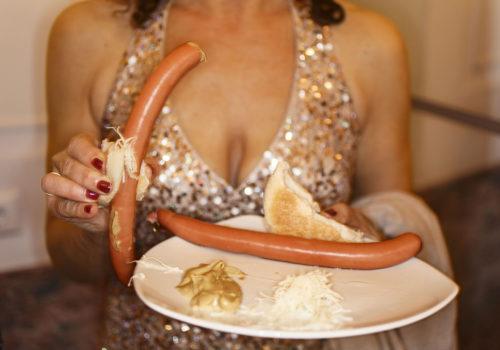
In Matino, Snack It! by Martin Parr is on display: over 60 photographs that transform food into an overview of daily habits, excesses and obsessions. It is an ironic, irreverent and critical look at consumer society. Parr works on the short circuit between desire and irony, representing improbable sandwiches and rainbow cakes. Observation develops in social grammar and anthropological study: what we consume becomes a collective ritual that mirrors society, each bite becoming a statement of identity. The snack is an icon of our fast-paced era. Six giant posters displayed on the ancient walls of Gallipoli highlight the interplay between historical context and a contemporary perspective. Works by Parr are also featured in Lecce in WOW!, an exhibition designed for young people and families, that presents an ironic and out-of-context atlas, inviting viewers to distinguish between imagination and reality in photography.
Blake Little and the Eternity of Honey
In Preservation, Blake Little suspends the image in the eternity of honey. The bodies are immersed in the honey, which transforms them into sculptures. Honey, an archaic substance, envelops and preserves, transfigures them. We live in an era in which time accelerates and memory fades. In an age that consumes everything, including the visual dimension, preservation becomes a subversive act for Little, a promise of identity preserved by the photographic act, an image in which emotion fades away, the body is transformed into an emotional fossil, preserving the moment of transformation. Recalling Rodin’s surfaces and Bacon’s anatomies, his images also project into the contemporary language of body culture. The technical action of the shot leads to a reflection on identity. Indeed, the honey slips, covers and transforms the subject, who undergoes a perpetual metamorphosis that calls into question individual identity.
Thought-provoking projects
The projects presented at the Yeast Photo Festival depict the complexities of the contemporary world. Each of them acts as a piece of a global narrative on themes such as food, environment, migration and identity. Together, they reveal a tension between ethical urgency and aesthetic contemplation, providing the public with a considered interpretation of reality.
In Taste & Track, curator and historian Artur Mettetal takes us on a thirty-year journey by train between Italy and France. The standardised design of the carriages, the plastic tableware, the railway maps and the on-board meals provide clues about a changing lifestyle. The journey is presented as a visual diary, restoring to the train its symbolic value as a place of belonging and memory, rather than just a means of travel. Hiền Hoàng, winner of the Irinox Save the Food Award, explores the themes of diaspora and stereotyping through family memories in Across the Ocean, constructing images that challenge dominant narratives and dismantle forms to generate counter-images that restore complexity to Asian identities in Europe. In One Third, Klaus Pichler transforms expired food into visionary still lifes, highlighting the absurdity of waste when so many people are suffering from hunger. In I N S C T S, Umberto Diecinove explores insect farming as a regenerative practice, emphasising the ability of insects to transform waste into resources. In Unleash Your Herd’s Potential, Dániel Szalai shifts the focus to precision farming, documenting a facial recognition system for cows that turns them into “data clouds”. Meanwhile, Ivor Prickett, winner of the 2025 Pulitzer Prize with the New York Times team, sheds light on the crisis in Sudan in his work, War on the Nile – Fragmented Sudan, which reveals how hunger is being used as a weapon. In The Island Within the Island, Melissa Carnemolla examines south-eastern Sicily as an extractive system comprising 9,000 hectares of greenhouses, where the lines between legality and exploitation are blurred. This project restores dignity to those who work in the shadows and invites us to reconsider the true cost of our food. In ‘Ingrediente pentru un tort de miere cu dragoste’ (Ingredients for a honey cake with love), Sara Lepore offers an intimate reflection born from memory and a linguistic misunderstanding: a love letter that turns out to be a recipe and a honey cake that becomes an apple cake. The theme of sustainability also features in A Natural Order by Lucas Foglia, documenting off-grid life in the American Southeast, dealing with families who grow their own food, build homes with local materials. In Green Resistance, Sara Scanderebech approaches the landscape as a secret code, treating each fragment as a clue to interpreting the present. Commissioned by the Yeast Photo Festival, this work engages with territory and community. Finally, traditions and identity in Buone Mani. Through the gesture of the hands, guardians of a thousand-year-old gastronomic tradition, the duo Flavio & Frank recount Galatina, highlighting the link between innovation and memory, and offering a slow celebration of local culture as a fabric of identity.
Thanks to its established collaborations with European organisations such as Fotofestival »horizonte zingst in Germany and Fotofestival Lenzburg in Switzerland, Yeast Photo Festival is engaging in a dialogue that transcends geographical and cultural boundaries, as food is a universal theme.
Paola Sammartano
Yeast Photo Festival 2025 – (N)ever Enough
From September 25 to November 9, 2025
Various venues in Matino, Lecce, Gallipoli, Castrignano de’ Greci, Galatina, Supersano (Puglia Region)
https://www.yeastphotofestival.it/