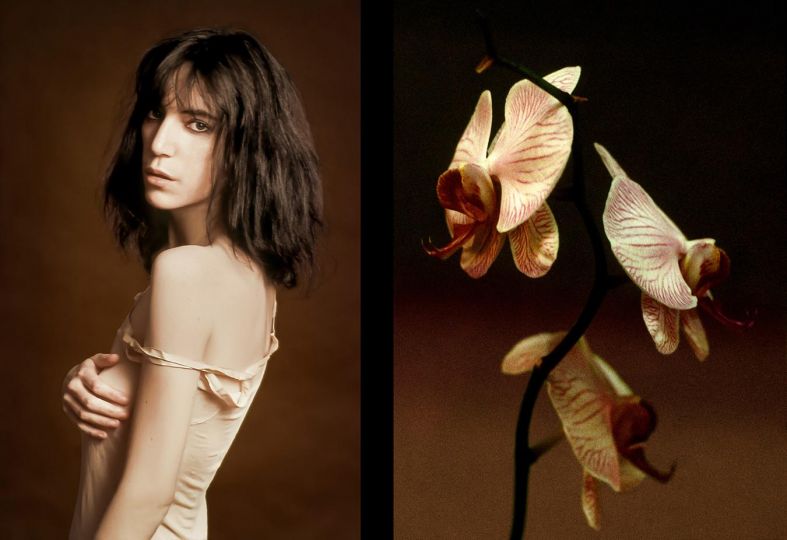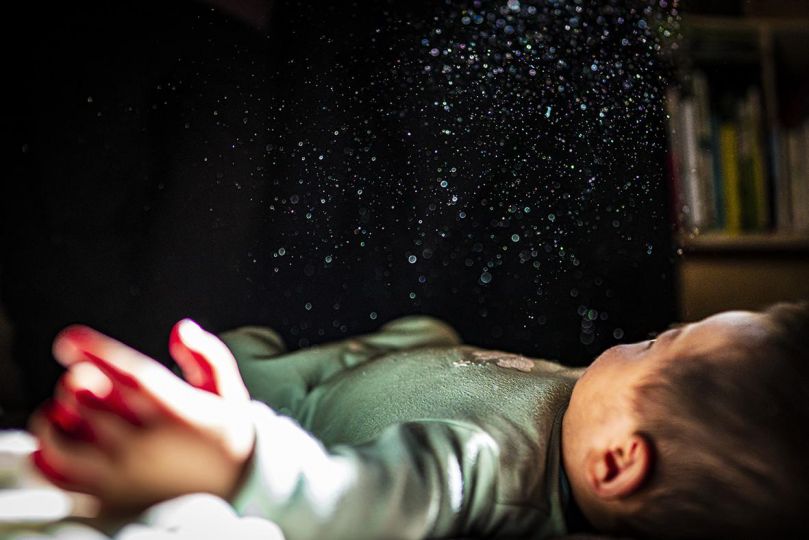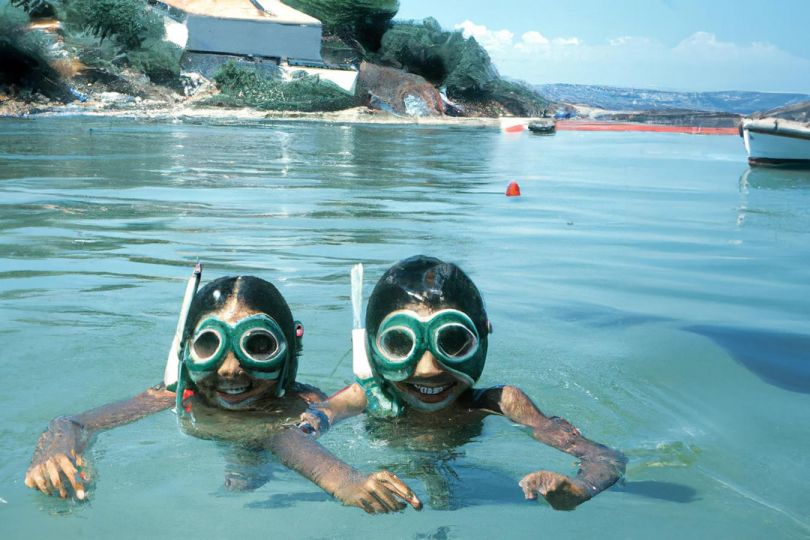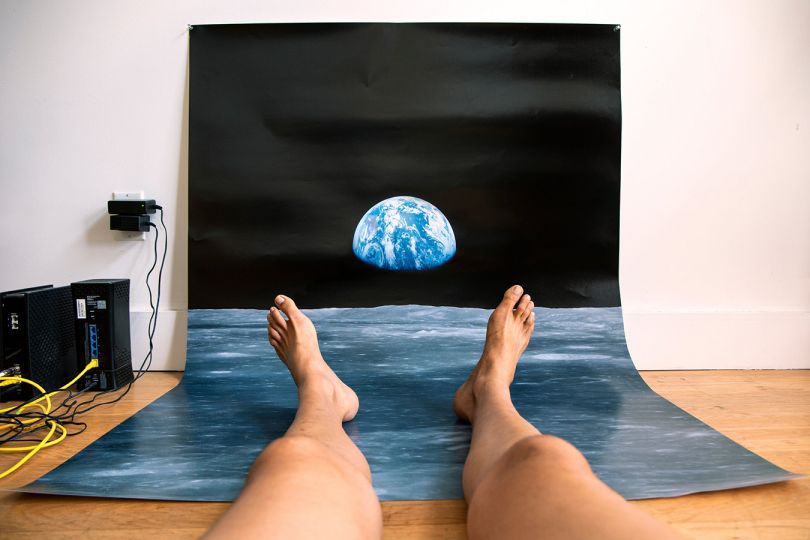
Photographer, curator, and publisher Ni Liang (倪梁) is one of the central figures in the Chinese contemporary photography publishing scene. A graduate of the International Center of Photography (ICP) in New York, his work has been selected by photography festivals in Berlin, and in 2016, he traveled to France for a residency at the Abbey of Saint-Riquier. He also curated the Lianzhou International Photography Festival in 2018 and was nominated for the Prix Pictet in 2024.
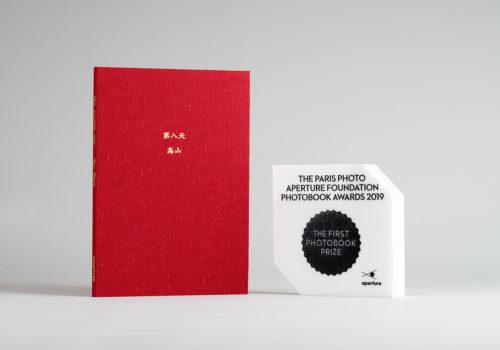
In 2015, he founded 无像Imageless, an independent publishing house dedicated to the publication, promotion, and collection of photographs. In 2018, he initiated the IDPA – Imageless Dummy Photobook Awards, an award aimed at encouraging the presentation of photographs in print. In 2019, The Eighth Day, a book by artist Gao Shan, won the First PhotoBook Prize at the PhotoBook Awards, awarded by Paris Photo and the Aperture Foundation.
At a time when photography remains a marginal medium and print publishing is losing ground, Ni Liang consistently advocates a demanding, work-centered editorial approach. For the past ten years, Imageless has actively participated in international book fairs and exhibitions. In 2025, the organization inaugurated iE sPaCe, a physical space in Shanghai, designed as a place for meetings, exhibitions, and the transmission of contemporary photography. At the same time, Imageless is developing its network of collaborations in Europe.
To celebrate Imageless’s 10th anniversary, we sat down with Ni Liang. Reflecting on his journey in publishing and distributing photography books, he shares with us how Imageless has created a platform for Chinese artists on the international stage, while also sharing his vision for transnational cooperation and future prospects.
Deng Qiwen: Since its inception, Imageless has set itself the mission of increasing the visibility of Chinese photographers on the international scene, while also emphasizing the “promotion” of photographic culture. How do you understand this notion of “promotion” in concrete terms? Does it refer solely to distribution channels such as publishing or exhibitions, or does it also involve an intervention on the structures of the gaze and a transformation of discourses?
Ni Liang: As a photographer from the younger generation of Chinese photographers, I had the opportunity to study photography abroad. These experiences allowed me to better understand, on both a macro and micro scale, the limitations of the mutual gaze between China and the West. This is why I initially chose to engage in publishing, particularly photography books. Because good work must first be seen to have more opportunities. It is a slow and long road, with no possible shortcuts.
Deng Qiwen: In both Chinese and foreign contexts, with what types of audiences or creators does Imageless wish to engage, and what exchanges or resonances do you hope to generate?
Ni Liang: Photography remains a niche artistic medium, still largely underestimated or even ignored, both in China and abroad. Our ideal goal is to build a connection between informed audiences and committed artists, which is why we participate in international book fairs and exhibitions. Through this small “window” that is the photo book, we hope to offer the world a glimpse of who we are.
Deng Qiwen: As an editor, you have participated in numerous photo book fairs such as Photo London and Paris Photo. Have you observed any forms of “misunderstanding” or contextual shifts in the international reception of Chinese photographs? Does this tension between local context and global perspective influence your editorial choices?
Ni Liang: What I feel most in recent years is the decline in professional exchanges on an international scale. This is due to the very nature of the photographic medium, but also to a broader global context. These are dynamics beyond our control. Stereotypes exist, of course, and our work is precisely to showcase the diversity of Chinese photographic voices. On the other hand, we also believe that good works can create universal resonance. For example, The Eighth Day, published in 2019 with the artist Gao Shan, was praised by the Japanese photographer Takashi Homma, and received the First PhotoBook of the PhotoBook Awards awarded by Paris Photo and the Aperture Foundation that year.
Deng Qiwen: In your opinion, what are the remaining blind spots or structural gaps in the photography publishing and distribution ecosystem in China today? How do these gaps affect young artists? Is Imageless consciously seeking to play a “complementary” role?
Ni Liang: In 2018, we launched the Imageless Dummy Photobook Awards (IDPA), an award designed to encourage artists to present their work in book form. All submitted projects are exhibited and evaluated by a professional jury, and the winners receive a cash prize. After six editions, this award has allowed us to identify many promising talents, some of whom we have entered into collaborations with.
This year, we opened iE sPaCe in the heart of Shanghai. One of its key components is our photobook library, which primarily contains recent works published abroad. It offers a microcosm of the current world of photography, accessible to the public by appointment.
Deng Qiwen: Last year, you published Sea Beach, in collaboration with Bangladeshi artist Ismail Ferdous. The book is available in leading Parisian bookstores such as delpire&co and La Boutique VU’. What motivated this project? How does it differ from your previous publications, which focused more on Chinese artists?
Ni Liang: In early 2023, I nominated young Chinese photographer Le Ziyi for the Leica Oskar Barnack Award (LOBA). He won the Newcomer Award that year. At the Polycopies fair in Paris, Le Ziyi introduced me to Ismail Ferdous, winner of the LOBA Grand Prize that same year. Thus began our collaboration.
This wasn’t our first international collaboration: in 2017, we reissued Slow Boat, an iconic work by Japanese photographer Koji Onaka. Transnational collaboration requires a shared understanding of the artist’s work and the establishment of mutual trust in order to be effectively promoted. It’s also a way to enrich mutual distribution in our respective fields.
Deng Qiwen: Do you plan to establish a more stable network of collaborations in France or Europe? If opportunities arise with local publishers, festivals, or art spaces, what type of partnership would you consider most relevant?
Ni Liang: We are completely open to any form of collaboration. International dialogue has always been at the heart of our approach. We hope to establish lasting ties with France and other European countries, whatever form that may take. For us, it is through collaboration that a shared future can be built!
Deng Qiwen: Looking ahead five years, what platform would you like Imageless to become?
Ni Liang: I’ve defined three areas of development for Imageless: first, continue to discover and promote exceptional artists and works through publishing and the IDPA Prize; second, support those who wish to invest in the professional field of photography through training, workshops, etc.; and third, fully develop our physical space, creating horizontal connections with other sectors, and vertical connections with the world!
Deng Qiwen: In one sentence, how would you present Imageless to our readers?
Ni Liang: Through Imageless, we reveal a contemporary China!
Interview by Deng Qiwen
无像Imageless
https://www.imagelessbooks.com/